
The Power of Space: Building a Legacy of Women’s Empowerment
In the heart of every community, there’s an undeniable truth: the spaces we occupy shape who we are, what we can do, and how we see ourselves. For the National Congress of Neighborhood Women (NCNW), space has never been just about physical walls—it’s been about the power to exist, to create, to lead, and to change the world. This is a story of how the act of claiming space became an act of resistance and empowerment, one that allowed women, particularly low-income women, to redefine their roles and their futures.
For generations, women—especially those from marginalized communities—have been denied the freedom to own the spaces they inhabit. They often don’t have control over the homes they live in, let alone the places they gather. Our journey began with the realization that having a space to call our own wasn’t just a matter of convenience—it was a matter of survival.
The struggle for control over space has always been central to the history of women’s organizing. In the 1980s, after facing eviction from the St. Nicks space, we learned just how precarious it was to not own the place where you gather. St. Nicks was formed precisely by NCNW after our women organized to take a closed hospital and turn it into social housing. Despite our efforts, we did not own the building and as the landlords prioritized capital gain, we were forced to leave. But instead of being defeated, we organized.
Women were already organizing in various ways, and our neighborhood was no different. It was a place where Italian immigrants, their families, and their neighbors lived and worked together. These communities had a deep sense of loyalty, and when the owner of the building—a local barber—heard we were looking for a place, he offered it to us without a contract, because he knew the honor of a handshake.
That building, purchased after the eviction, was more than just bricks and mortar. It was a symbol of our power and our vision. Having women rights was one thing but women needed a place to be. Fighting to make a better community required us to be able to control the space we were meeting in and without this space we could not exist right now. At the NCNW, this was a stark reality. But we knew one thing for sure: you can’t lead if you don’t have a place to lead from. By claiming it as our own, we sent a clear message: women deserve space, and we will not be erased.
When we moved in, it was a turning point. The women who walked into these rooms, who sat at desks and held meetings in offices where no women had ever sat before, experienced a sense of power that was entirely new. These were not just desks; they were symbols of our capacity to create, to organize, and to influence change. Our headquarters, where the NCNW now thrives, is more than a place where we work. It’s a testament to the women who’ve fought to build, protect, and sustain it—and to the generations of women who will come after us. Owning this building wasn’t just about having a roof over our heads—it was about what that roof allowed us to do. It allowed us to host meetings, create projects, and build a network of women who could challenge the status quo. It gave us the foundation to expand our reach, both locally and nationally, to make our voices heard, and to give credit to the women who’d never been given credit before.
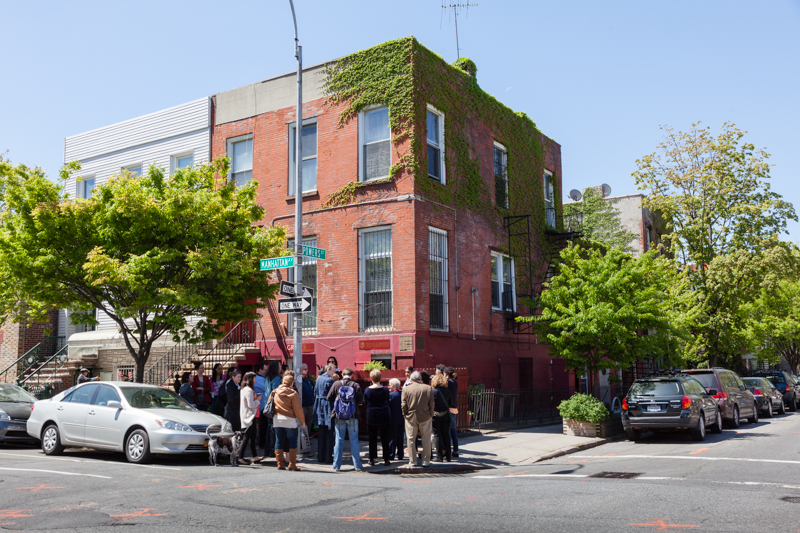
Located in a building that once housed a courthouse and prison, then a factory where women worked under harsh conditions making jackets and teddy bears, this space has seen many transformations. One of the most powerful moments in our journey was the act of naming our space. In our community, naming is not just symbolic—it’s an act of recognition. To name a space after the women who shaped it is to acknowledge the value of their contributions. It’s the recognition that their labor, their passion, and their leadership are worth honoring. It’s also a reminder that the stories of low-income women, particularly those who have been marginalized, are important. This sentiment transformed into the Walking Tours, as it navigates people in discovering how these grassroots women leaders and activists transformed Williamsburg-Greenpoint. NCNW went on to establish the Swinging Sixties center, which holds a variety of programs tailored for older adults in the community.
At the end of the day, the story of the NCNW is the story of women who refused to be pushed aside. It’s about taking control of space—physically and symbolically—so that we can create the future we deserve. We wouldn’t be who we are today without this space, and this space wouldn’t be what it is without the women who’ve fought for it. From the courtrooms and factories of the past to the vibrant, powerful women’s spaces we build today, we carry on the legacy of those who came before us. And, just as importantly, we pave the way for the women who will follow.Visit our website for more information and see how this space has grown and transformed over the years into the powerful hub of community, change, and hope that it is today.